


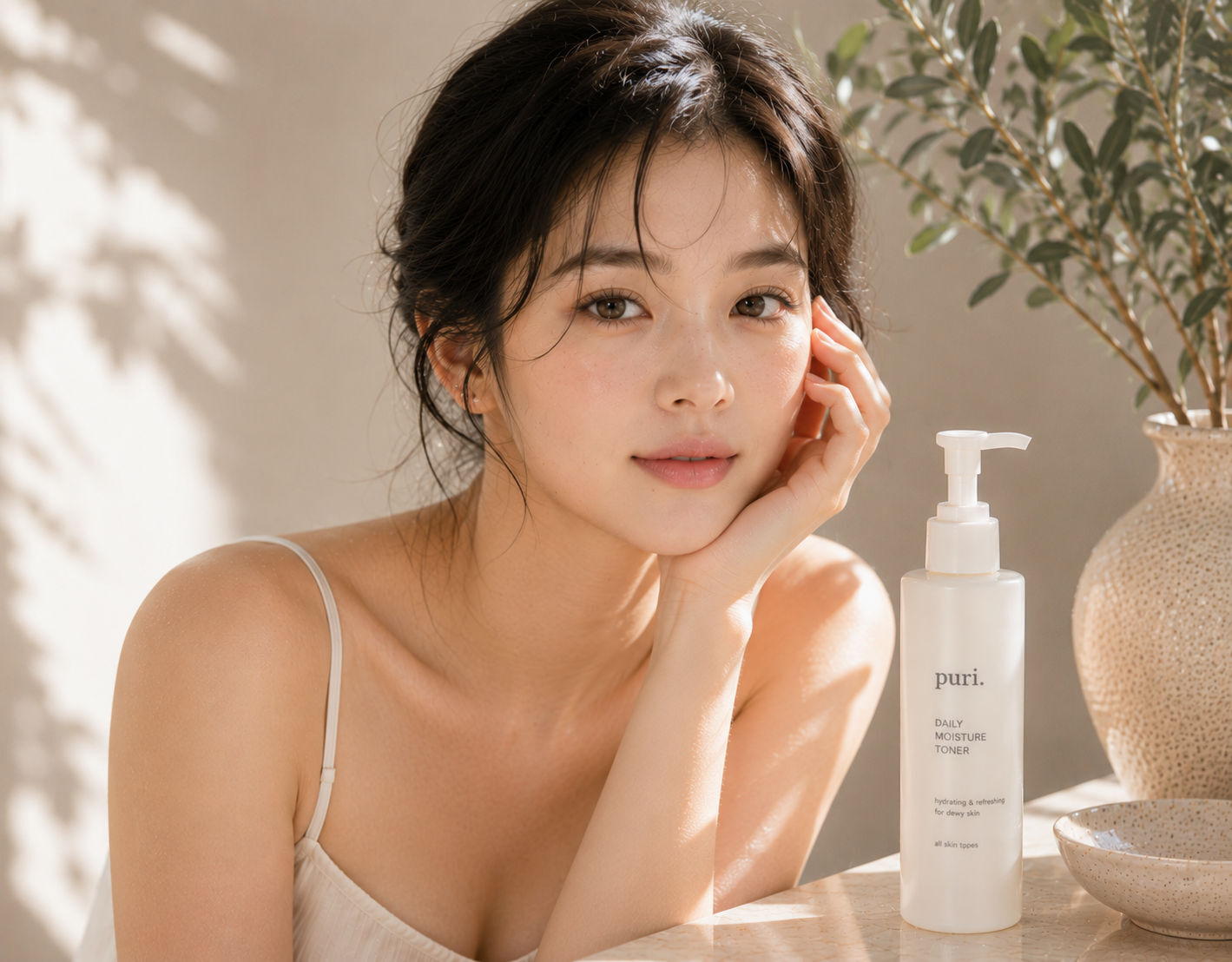
Ceramide serum is a product that utilizes ceramide, which is related to the lipid composition of the skin's stratum corneum, as a key ingredient to reduce moisture loss and support the flexibility and barrier function of dry skin. Unlike hyaluronic acid serum, which attracts moisture, ceramide serum is distinguished by its product purpose in that it focuses on the lipid environment of the skin's surface and moisture retention.
Ceramide is not a single ingredient. In cosmetic ingredient lists, it may be labeled as Ceramide NP, AP, EOP, NS, AS, etc., and the formula and price vary depending on whether the ingredient is a single ceramide, a complex combining multiple ceramides, or a premix that supplies ceramide along with cholesterol, fatty acids, and phytosphingosine. The EU CosIng defines Ceramide NP as an N-acylated sphingolipid in which fatty acids are combined with phytosphingosine. European Commission CosIng
Commercially, it is appropriate to define it not as a pharmaceutical-type barrier treatment, but as a daily barrier moisturizing serum that replenishes moisture and lipids to dry and sensitive skin . Instead of “treating damaged skin barriers,” cosmetic expressions such as “helps support the skin’s moisture barrier” and “helps reduce dryness” should be used.
Key consumers are those whose skin feels tight quickly after washing their face, or whose skin has become rough and sensitive due to seasonal changes, dry indoor environments, excessive cleansing, or exfoliation. There is also significant demand from consumers who use retinol or acidic ingredients for barrier moisturizing products to use on days when they do not use active ingredients.
The features consumers expect are as follows.
- Relieves tightness and rough texture caused by dryness
- Long-lasting skin moisture retention
- Comfortable to use on sensitive skin
- A formula that is lighter than cream and more moisturizing than toner
- Layering that can be used with sunscreen and makeup
- Daily Formula with reduced fragrances and unnecessary irritants
The main complaints regarding ceramide serums are heavy oiliness, delayed absorption, pilling, white cast, the smell of the ingredients, and separation during storage. It is difficult to secure repurchase based solely on the message that the ceramide content has been increased. Actual product competitiveness is determined by the balance between a light, milky texture and sufficient, long-lasting hydration .
In the global skincare market, ceramides have already secured high recognition as a representative ingredient group for skin barriers and sensitive skin. While hyaluronic acid is a general-purpose moisturizing ingredient, ceramides are linked to more specific purchasing objectives, such as managing dryness, sensitivity, and skin barriers.
The primary target audience is consumers in their 20s to 50s in the U.S., Europe, Japan, Southeast Asia, and the Middle East. While the focus is on dry, sensitive, and dehydrated combination skin types, the lightweight formula can extend its application to the moisturizing routine of oily and acne-prone skin.
There are three market opportunities.
First, there is a demand to shift from cream-based ceramide products to lightweight serums. Second, it involves a complex lipid design combining ceramide, cholesterol, and fatty acids, moving beyond a single Ceramide NP label. Third, it is a K-Beauty sensitive product that combines fragrance-free, hypoallergenic, and concise ingredient messaging.
On the other hand, numbers such as “5-Ceramide” or “10,000 ppm” do not automatically guarantee actual barrier performance. Buyers should compare the dispersion state, skin applicability, moisture retention, and TEWL data of the finished product together, rather than the number of ingredients or raw material input rates.
Due to their high lipophilicity, ceramides are difficult to simply incorporate into standard aqueous serums. To ensure uniform dispersion, soluble, emulsified, liposomal, or lamellar structures, or commercially available ceramide premixes, are used. For this reason, ceramide serums are often developed as milky white emulsion serums rather than clear water serums.
Combining cholesterol and fatty acids with ceramides can create a complex lipid-based barrier moisturization story. However, one should not assume that specific lipid ratios are identical to the skin's structure, nor should ideal ratios found in the literature be mechanically applied to all finished products. The optimal formula varies depending on the type of ingredients, delivery method, emulsifiers, and texture.
Moisturizing ingredients such as glycerin, propanediol, betaine, and hyaluronic acid complement immediate hydration, while squalane or light esters provide a supple finish. Panthenol can be used as a soothing and moisturizing auxiliary ingredient, but the formula must be designed so that the various Hero Ingredients do not overpower the ceramide message.
Formula Route Comparison
| Formula Route | Core Design | Suitable Market · Advantages | Key management points |
|---|---|---|---|
| A. Lightweight Ceramide Serum | Ceramide NP-centered lightweight milky serum | Global Mass Market · Combination Skin · Layering | Dispersion stability, turbidity, mottled |
| B. Multi-Lipid Barrier Serum | Multiple ceramide + cholesterol + fatty acids | Dry, Sensitive, Premium Barrier Products | Lipid balance, cost, oiliness |
| C. Minimal Ceramide Serum | Ceramide premix + essential moisturizer, fragrance-free, simple formula | NoChemiLife · Sensitive Market | Preservative power, raw material odor, ingredient count limitations |
Route A is suitable for global general-purpose products, while the fragrance-free Multi-Lipid Milky Serum, combining Routes B and C, is suitable for NoChemiLife Hero products . An emulsion serum that flows lightly and leaves a flexible film after application is more effective in conveying the product's intended purpose of ceramides than an excessively watery type.
When a Buyer makes a request to an OEM, they should not just state “1% ceramide” but distinguish the following.
- Ceramide premix input rate
- Actual ceramide active content in premix
- Individual INCIs such as Ceramide NP, AP, EOP, etc.
- Whether cholesterol, fatty acids, and phytosphingosine are included
- Raw material delivery and dispersion method
- Calculated content of each lipid in the finished product
- Standards for verifying equivalence when changing raw materials
While ceramide is used as a moisturizing and skin conditioning ingredient in cosmetics, the safety and barrier performance of the finished product are not determined solely by the ingredient name. Safety evaluation must cover not only the ceramide ingredient but also emulsifiers, preservatives, fragrances, plant extracts, and the entire formula.
For products exported to Europe, safety assessments, PIF, CPSR, CPNP, and grounds for claims must be prepared in accordance with Regulation (EC) No. 1223/2009. The United States reviews MoCRA facility registration, product listing, records of safety verification, and obligations regarding adverse events based on the roles of the manufacturer and the responsible party.
Key Points of Regulation and Validation
| Review Area | Buyer Checklist | Recommended Validation |
|---|---|---|
| Raw material identity | Ceramide type, origin, premix composition, assay, CoA | INCI, Specification, Allergen, and Raw Material Traceability Verification |
| Formula stability | Oil phase separation, precipitation, crystallization, changes in color, odor, and viscosity | Room temperature, accelerated, and temperature cycling stability, microbial protection, and preservation capabilities |
| Container suitability | Pump discharge, nozzle blockage, remaining contents, leakage | Container conformity, transport testing, and discharge volume evaluation |
| Performance · Claim | Long-lasting hydration, relieves dryness, supports skin barrier, sensitive | Corneometer, evaluation of TEWL, usability, and safety as needed |
Several studies have reported the potential for ceramide-containing topical agents to improve dry skin and barrier function. However, since these research results pertain to specific creams, lotions, or combination formulations, the same findings cannot be applied to new serums simply because they contain the same ingredients. Literature reviewing comparative studies also assesses that ceramide-containing moisturizers can improve dry skin and barrier function; however, performance differences between formulas and heterogeneity in study designs must be taken into account. Systematic Review of Ceramide Formulations
In studies using ceramide-containing cleansers and moisturizers in conjunction with acne treatment, improvements in dryness, erythema, keratinization, and barrier damage were observed; however, these results pertain to the combined regimen and should not be interpreted as the independent therapeutic effect of the ceramide serum. PubMed clinical study
“barrier repair,” “clinically proven,” “hypoallergenic,” and “dermatologist tested” should be used only if relevant finished product testing and evaluation conditions exist. If testing is limited, levels such as “hydrates,” “helps reduce moisture loss,” and “supports the skin's moisture barrier” are appropriate.
The recommended packaging is a 30-50 mL airless pump or a sealed pump container. Since ceramide serum may contain oil phase components and dispersed substances, a pump type is more advantageous for hygiene and accurate dosage than a jar, which is exposed to repeated contact with external air.
Droppers visually enhance the serum image, but depending on the viscosity of the milky emulsion, the pipette filling volume can become irregular and residue may form on the neck of the container. If the viscosity is high or there is a possibility of viscosity change during long-term storage, an airless pump is more stable.
The target shelf life can generally be set to 24 to 36 months for unopened products, but the actual stated period is determined based on data regarding stability, preservation, and packaging suitability. The RFQ for export includes the following conditions.
- Target countries and responsible sellers
- Capacity, container material, pump discharge rate
- Fragrance-free status and permissible standards for inherent raw material odors
- Oil phase separation, crystallization, and viscosity standards after temperature change
- English full ingredients and multilingual label coverage
- PAO · LOT · Expiration Date Marking
- Document support by target market, such as the EU, US, and ASEAN
- Single box, cushioning, leakage prevention, and transport conditions
Ceramide serums can be positioned as barrier moisturizing products with higher functional recognition than regular hydration serums. Pricing should be justified not by the name "ceramide" itself, but by the actual ceramide activity, complex lipid structure, delivery system, validation, and packaging quality.
The recommended retail price range for 30~50mL is as follows.
- Entry K-Beauty: USD 16~22
- Core masstige: USD 22~35
- Premium multi-lipid: USD 35~55
Ready formulas using a single ceramide NP premix can be developed relatively quickly. On the other hand, combining multiple ceramides with cholesterol and fatty acids, and adding human clinical trials related to the skin barrier, increases raw material costs, development costs, and MOQ.
When receiving a quote, the Buyer should not compare different premix input rates based on the same ceramide content. A comparison converted to actual ceramide activity is required based on the same volume, packaging, and test range.
Cocokind Ceramide Barrier Serum is a representative global ceramide serum that emphasizes moisture retention and skin barrier support by utilizing five types of ceramides and lipids. It serves as a direct product benchmark in that it proposes ceramides as a lightweight daily serum rather than a cream. Cocokind Official Product
Dr.Jart+ Ceramidin Skin Barrier Serum Toner is an off-white serum-like toner infused with Ceramide NP and Panthenol. The brand presents its moisturizing and barrier performance based on specific clinical trial conditions, marking a premiumization of the K-Beauty ceramide barrier category. However, since the volume and application step differ from standard 30mL serums, the price and formula should not be directly compared. Dr.Jart+ Official Product
CeraVe Hydrating Hyaluronic Acid Serum is not a standalone ceramide "hero" product, but by combining three types of ceramides with hyaluronic acid and vitamin B5, it effectively conveys a message of hydration and skin barrier protection to the general public. It serves as an adjacent benchmark for verifying ingredient composition and pricing standards in the global mass dermatological market. CeraVe Official Product
The differentiating point of NoChemiLife is not increasing the number of ceramides, but rather it is appropriate to set it as follows.
- Confirmation of individual ceramide INCI and actual activity
- Fragrance-free, hypoallergenic, and sensitivity-focused design
- A milky texture that is lighter than cream and more flexible than water serum
- Complex lipid formula containing cholesterol and fatty acids
- A restrained claim based on data regarding moisturization duration, TEWL, and user experience
Korean OEM/ODM providers can offer a diverse range of services, from ready formulas containing ceramide to full-custom ODM utilizing complex lipid delivery systems. Buyers should not rely solely on the product name of the “multi-ceramide complex” provided by the manufacturer, but must review the actual composition and active ingredient content using confidential technical data or specifications.
OEM/ODM Development Path
| Development Route | composition | Suitable Buyer | RFQ Key Points |
|---|---|---|---|
| Ready Formula | Existing Milky Serum + Commercial Ceramide Premix | Fast launch · Low development risk | Existing test data, changeable range, actual active amount |
| Semi-Custom ODM | Adjustment of ceramide type, moisturizer, texture, and packaging | Differentiation by SME brand and market | Sample count, raw material MOQ, viscosity, fragrance, and color standards |
| Full-Custom Multi-Lipid | Proprietary design of multiple ceramides + cholesterol + fatty acids | NoChemiLife Hero · Premium Export | Prescription ownership, safety, human application, and exclusivity conditions |
The OEM inquiry form includes the target market, estimated order quantity, target FOB, capacity and container, benchmark, ceramide type, actual active amount, complex lipid requirements, whether it is fragrance-free and ethanol-free, vegan requirements, prohibited ingredients, and the scope of testing and export documentation.
A vegan claim cannot be confirmed solely by the description that it contains synthetic or plant-derived ceramides. The origin of the culture medium, processing aids, and cholesterol, as well as the entire formula of the finished product, must be verified. Furthermore, since "vegetable ceramide" and "structure identical to ceramide found in the skin" are distinct concepts, they must be expressed in accordance with the ingredient data.
Contact to: mail@markethub.org
The key questions a buyer should verify with the manufacturer are as follows.
- What are the exact INCI and individual types of the ceramides used?
- What are the ceramide premix input rate and the actual ceramide active content, respectively?
- Does it contain cholesterol, fatty acids, and phytosphingosine?
- Can you provide information regarding the origin of the ingredients and details regarding veganism, allergens, and GMOs?
- By what dispersion or delivery system is ceramide stabilized?
- Is there no separation, precipitation, or crystallization after high temperature, low temperature, or temperature cycling?
- What finished product tests support the barrier and moisturizing claims?
- What are the MOQ, sample costs, lead time, target FOB, and packaging MOQ?
- What is the scope of export support such as CPSR/PIF, CPNP, and MoCRA?
- What are the conditions for prescription ownership, market exclusivity, and change management of key ingredients?
The sample is not judged solely by the initial application sensation. Absorption immediately after application, oiliness and stickiness after 10 to 20 minutes, pilling with sunscreen, tightness after several hours, residue after washing, pump dispensing, and remaining amount in the container are evaluated together.
The most commercially dangerous scenarios are promoting a high premix ratio as if it were a high ceramide content, or using barrier data provided by the raw material supplier as if it were clinical results of the finished product. Prior to signing a contract, the scope of application for the Formula specification and the Claim substantiation data must be distinguished.
Ceramide serum is directly linked to global consumers' interest in skin barriers and can accommodate the demand for a lighter texture than cream, making it a high priority for both Global Core and OEM/ODM. It also aligns well with the NoChemiLife direction of being sensitive, fragrance-free, and composed of complex lipids.
However, product quality is not determined solely by increasing the types or number of ceramides. Actual active content, complex lipid composition, stable dispersion, a light texture, and finished product validation must be secured simultaneously. In the initial RFQ, it is appropriate to obtain separate quotations for the low-cost ready formula and the proprietary Multi-Lipid ODM.
6 Key Evidences
- European Commission CosIng – Ceramide NP
- Systematic Review of Ceramide-Containing Topical Preparations and the Skin Barrier
- Clinical Study of Ceramide-Containing Moisturizing Regimen – PubMed
- Cocokind Ceramide Barrier Serum Official Information
- Dr.Jart+ Ceramidin Skin Barrier Serum Toner Official Information
- CeraVe Hydrating Hyaluronic Acid Serum Official Information
Runtime: 2026-09-01
