


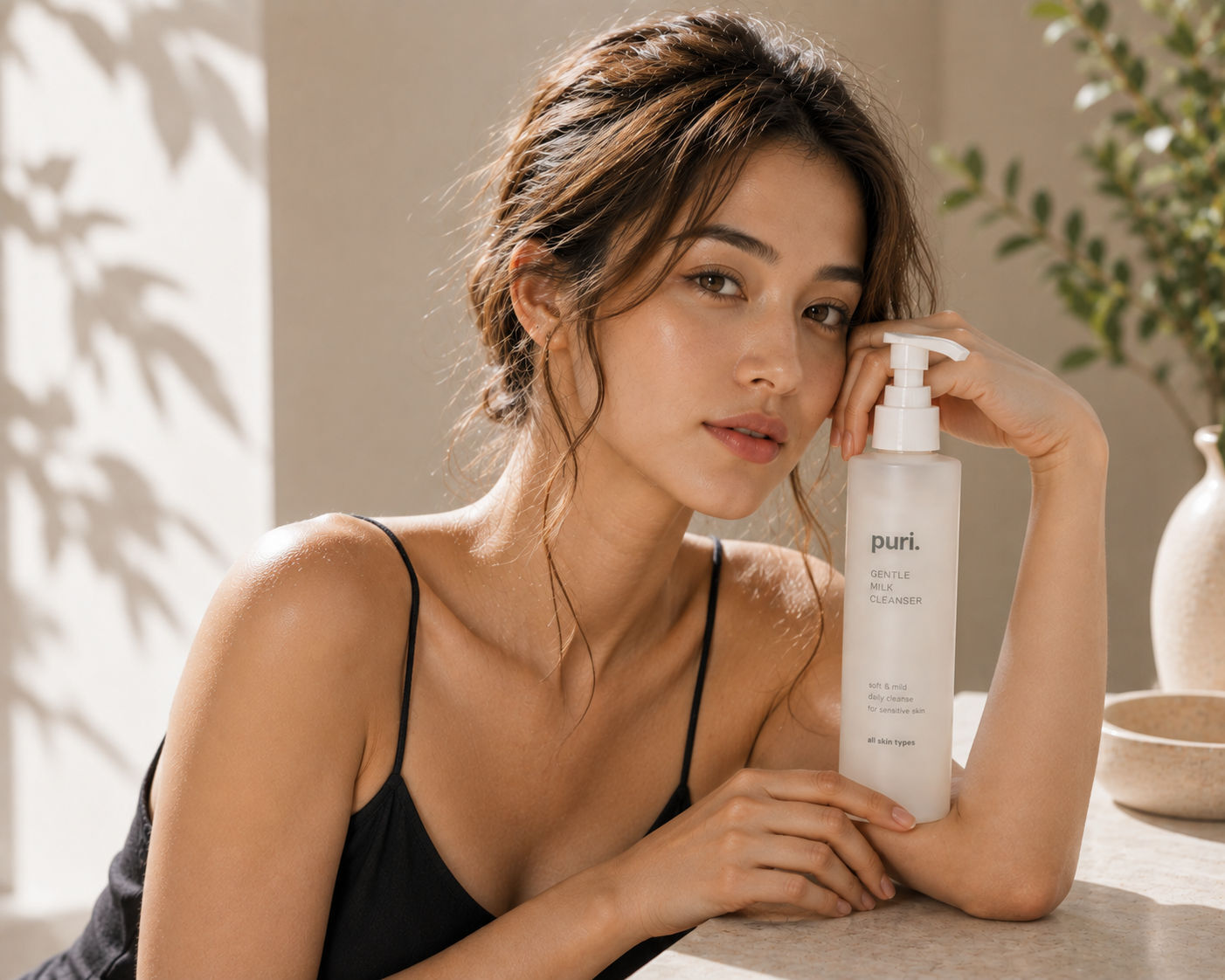
Peptide serum is a moisture-based serum that manages skin elasticity, smoothness, and the appearance of fine lines by applying cosmetic peptides composed of short amino acid chains. It is positioned as an early anti-aging care product that can be used daily, rather than focusing on the skin adaptation period like retinol.
Peptides for cosmetics do not belong to a single functional group. They can be classified into signal peptides such as Palmitoyl Tripeptide-1 and Palmitoyl Tetrapeptide-7, neurotransmitter-related peptides such as Acetyl Hexapeptide-8, and carrier peptides such as Copper Tripeptide-1. However, this classification is a framework for explaining potential functions and does not automatically guarantee skin penetration or clinical efficacy of the finished product.
Commercial raw materials are often supplied as premixes or solutions containing water, glycerin, preservatives, etc., rather than the peptide itself. Therefore, “Peptide Complex 10%” or “30% peptide blend” should not be interpreted to mean 10% or 30% actual pure peptide. Buyers must distinguish between individual INCIs, premix input rates, and peptide active content.
The core consumers are people in their 25s to 50s who want to preventively manage fine lines that appear prominent due to dryness, loss of elasticity, and rough skin texture, rather than treating deep wrinkles. This also includes consumers who are sensitive to retinol or acidic ingredients, or those looking for a mild firming serum that can be used both morning and evening.
Key consumer demands are as follows.
- Reduces the appearance of fine lines and dry wrinkles
- Skin elasticity and smooth skin texture
- Immediate hydration and long-term firming management
- More comfortable for daily use than retinol
- Fragrance-free and hypoallergenic formula
- Layering that can be used with sunscreen and makeup
- Ingredient transparency allowing verification of the peptides used and their content
Consumer complaints regarding peptide serums include the difficulty in perceiving their effects and the stickiness and pilling that occur when high molecular weight moisturizers, gums, and polymers are used together. If film-forming agents are used excessively to create immediate firmness, temporary tightness may be perceived as a firming effect, so this must be distinguished from long-term performance.
The global peptide market has established itself as an early-aging category that is milder than retinol and more stable than vitamin C. Ingredient-focused products such as “multi-peptide,” “copper peptide,” and “collagen-supporting peptide” coexist with complex serums that address hydration, elasticity, and skin texture all at once.
The main targets are as follows.
- People in their 25s to 40s managing early fine lines and loss of elasticity
- People in their 30s to 50s sensitive to strong active ingredients
- Consumers who use moisturizing and firming products between days of retinol use
- Buyers of ingredient-focused premium skincare
- Consumers looking for fragrance-free, hypoallergenic products suitable for daily use
- Consumers who prefer K-Beauty layering and booster serum
In the U.S. and Europe, firming, elasticity, and a fine-line appearance are key messages, while in Southeast Asia and the Middle East, firming products combined with moisture and radiance are suitable. Although market competition emphasizing the number of peptides is intense, it is difficult to judge actual product differences based solely on the ingredient name and the number of peptides.
NoChemiLife is suitable for combining a moisturizing base with 2 to 4 peptides that have clearer evidence and roles than a “10-peptide complex,” and for presenting actual active amounts and finished product tests.
Peptides are easy to apply to water-soluble serums, but recommended pH, temperature, infusion step, and stability vary for each individual peptide. Since high temperatures, extreme pH, specific metal ions, or oxidizing conditions during manufacturing can affect the quality of some peptides, you must follow the supplier's technical data.
A multi-peptide formula should not simply include large quantities of ingredients with different functions, but rather select a combination necessary for the target claim. It can combine a signal peptide focused on fine lines and elasticity, a peptide targeting the appearance of expression lines, and a copper peptide for antioxidant and skin conditioning purposes.
Hyaluronic acid, glycerin, betaine, and panthenol provide immediate hydration and skin elasticity. Niacinamide or adenosine can extend the function, but it becomes difficult to explain the independent contribution of peptides, and the product may overlap with No.024 Firming Intensive Ampoule.
Formula Route Comparison
| Formula Route | Core Design | Suitable Market · Advantages | Key management points |
|---|---|---|---|
| A.Signal Peptide Hydrating Serum | 2~3 signal peptides + HA·humectant | Early anti-aging · Global universal · Low irritation | Actual active amount, efficacy differentiation |
| B. Multi-Peptide Firming Serum | Signal+expression-related peptide combination | Elasticity, Fine Lines, and Masstige Market | Duplication of ingredients, stickiness, proof of claim |
| C. Copper Peptide Serum | Copper Tripeptide-1-centered blue hydration serum | Premium and ingredient-specialized market | Color, Metal Ion Compatibility, Cost, and Usage Guide |
Route A is primarily suitable for NoChemiLife. A fragrance-free serum combining two to three palmitoyl-based signal peptides with moisturizing ingredients makes the formula easy to explain and reduces the potential for irritation and conflicts between ingredients. Although copper peptide offers strong visual differentiation, it is better to manage it as a separate specialized line.
The RFQ specifies the following.
- Accurate INCI of individual peptides
- Supplier product name and overall premix composition
- Premix input rate and actual peptide active content
- Purpose of each peptide in the formula
- Recommended pH, temperature, and manufacturing input steps
- Target viscosity, absorption time, and peeling criteria
- Primary Claim among fine lines, elasticity, and moisture
- Equivalence criteria when changing raw material suppliers
Topical peptides for cosmetics generally have good usability, but not all peptides have the same skin penetration and clinical evidence. Skin applicability varies depending on molecular size, hydrophilicity, lipidation, delivery system, and finished product state.
Recent literature reviews suggest that cosmetic peptides have the potential to manage wrinkles and the appearance of aging through various mechanisms, but also indicate that there are many in-vitro, ex-vivo, and supplier studies, and that the level of evidence differs between individual peptides and finished products. Review of Research on Cosmetic Peptides
A review evaluating clinical literature on topical peptides also showed that some peptides demonstrated the potential to improve the appearance of skin aging, but the scale of studies and formula standardization were limited. Therefore, claims should be limited to the level of improvement in elasticity and wrinkle appearance observed in the finished product, rather than using strong expressions such as "collagen regeneration" or "botox-like." Review of Evidence for Topical Peptides
Key Points of Regulation and Validation
| Review Area | Buyer Checklist | Recommended Validation |
|---|---|---|
| Raw material identity | Individual INCI, peptide content, premix composition, purity | Specifications · CoA · Raw Material Traceability · Supplier Change Management |
| Formula stability | pH, color/odor, viscosity, precipitation/separation, peptide residue | Room temperature, accelerated, and temperature cycling; marker quantification if necessary |
| Safety and usability | Stinging, redness, tack, pilling, use around eyes | Evaluation of finished product safety, usability, and sensitivity |
| Performance · Claim | Moisture, appearance of fine lines, elasticity and smoothness | Device evaluation + Expert and consumer evaluation |
In Korea, merely using general peptides does not qualify a product as a functional cosmetic for wrinkle improvement. One must review the process of applying officially designated functional ingredients, such as adenosine, in accordance with standards or preparing individual review data. Even when proceeding with a functional report by adding adenosine, the evidence for the efficacy of the peptides and the evidence for the functionality of adenosine must be distinguished.
Expressions such as “collagen replacement,” “cell regeneration,” “Botox replacement,” and “wound healing” may fall outside the scope of scientific basis for cosmetics. Recommended expressions are: improves the appearance of fine lines, helps skin feel firmer, and supports smoother-looking skin.
A 30~50mL airless pump is recommended. Since peptide serums are water-based, a dropper can also be used, but a metered pump is advantageous to reduce repeated contact with air and variations in consumer usage.
Copper Tripeptide-1 Formula may exhibit a blue color due to the characteristics of the raw material. While the initial color can be used as a marketing element, color variation between lots and discoloration over time must be managed. If transparent containers are used, light exposure and the likelihood of consumers perceiving discoloration should be evaluated together.
The target shelf life can be set to 24 to 36 months unopened, but formula stability and residual data of key peptides or representative markers must be verified. If the raw materials of the peptide premix have a short shelf life or require refrigerated storage conditions, it affects the production plan and MOQ.
Export RFQs include container material, pump flow rate, pH, viscosity, and color specifications, core peptide shipment standards, PAO, label wording, and claims for each target country.
Peptide serums can be positioned as early aging products that are more professional than hydration serums and more comfortable than retinol. However, there is a limitation in that it is difficult for consumers to understand the differences between products due to the complex product names of peptide ingredients.
The recommended retail price range for 30~50mL is as follows.
- Entry K-Beauty: USD 16~22
- Core masstige: USD 22~38
- Premium multi/copper peptide: USD 38~70
Price should be explained by the actual activity of individual ingredients, supplier technology, clinical trials, prescription exclusivity, and packaging, rather than the number of peptides. Formulas containing small amounts of various peptide premixes may have an impressive list of ingredients, but their actual cost and product differentiation may be low.
Buyers should not compare claims such as “30% peptide complex” as is, but should recalculate quotes based on the dilution composition of the premix and individual active content.
The Ordinary Multi-Peptide + HA Serum is a globally affordable product that manages fine lines, elasticity, and skin texture by combining various peptide technologies with hyaluronic acid and amino acids. The official page presents the efficacy evaluation of the finished product conducted over 8 weeks with 30 subjects. The Ordinary Official Product
Medik8 Liquid Peptides is a premium serum that emphasizes a 30% peptide blend composed of 10 peptides. Here, the 30% should not be interpreted as synonymous with 30% pure individual peptides; this serves as a prime example where buyers must distinguish between the ingredient blend and the actual active ingredient content. Medik8 Official Product
COSRX The 6 Peptide Skin Booster Serum is a lightweight, booster-type K-Beauty product formulated with six types of peptides. With its large 150mL capacity and toner-like texture, it differs from standard 30mL peptide serums in terms of price and usage patterns, as it is applied prior to the serum step. COSRX Official Product
NoChemiLife can differentiate itself in the following ways.
- Disclosure of accurate individual peptide INCI
- Distinguishing between premix input rate and actual peptide active content
- Composed of 2 to 4 peptides with non-overlapping roles
- Fragrance-free, low-stickiness, low-pilling daily formula
- Validation of finished product elasticity and wrinkle appearance, not supplier testing
Domestic OEM/ODM products include Ready Formulas that utilize various global peptide premixes. While manufacturers may propose multiple complexes with different product names, identical individual peptides may be duplicated, or the actual activity may be very low.
OEM/ODM Development Path
| Development Route | Development method | Suitable Buyer | RFQ Key Points |
|---|---|---|---|
| Ready Peptide Formula | Utilizing existing multi-peptide hydration serum | Fast launch · Low development risk | Duplication of existing prescriptions, peptide INCI and test data |
| Semi-Custom Signal Peptide | Adjustment of 2–4 target peptides, moisturization, viscosity, and packaging | Global Core · Sensitive Brand | Actual activity, pH, sample correction, functional pathway |
| Full-Custom Evidence Route | Unique combination + elasticity/wrinkle appearance human application | Premium · NoChemiLife Candidate | Prescription ownership, testing fees, exclusivity, change of raw materials |
The Semi-Custom Signal Peptide Route is suitable for NoChemiLife. It allows for clearer definition of the role and content of individual peptides compared to Ready Formulas, and makes it easier to control development costs and lead times compared to Full-Custom.
The RFQ includes target market, skin type, individual peptide INCI, actual active amount, auxiliary ingredients, pH, viscosity, fragrance-free status, functional cosmetic route, human clinical trials, formula ownership, and ingredient change management conditions.
Contact to: mail@markethub.org
The key questions a buyer should verify with the manufacturer are as follows.
- What is the exact INCI of the individual peptides used?
- What are the input rates and actual peptide active content of each premix?
- Even if the raw material product names are different, are the same peptides duplicated?
- What are the roles and rationale of individual peptides within the formula?
- How are stability conditions such as pH, temperature, and metal ions managed?
- What are the fine wrinkle, elasticity, and moisture tests for the finished product?
- What ingredients and pathways do anti-wrinkle functional cosmetics use?
- What are the MOQ, sample costs, development time, FOB, and container MOQ?
- Is Buyer approval required when changing the core peptide supplier?
- To whom do the rights to the formula, test materials, and market monopoly belong?
The Golden Sample does not determine the firming effect based solely on the tightness or film-like sensation at the moment of application. It evaluates stickiness after absorption, pilling with sunscreen and makeup, and moisture, skin texture, and container dispensing ability after repeated use.
Even if it is difficult to quantify all individual peptides, the finished product approval specifications must include records of key raw material input, raw material CoA, manufacturing input stages, and representative marker management methods.
Peptide serums hold high consumer interest and potential for OEM/ODM development in the nascent anti-aging, elasticity, and fine lines markets. However, the labeling of peptide complex names and content does not adequately reflect actual activity levels, and there are significant variations among products in terms of skin delivery and clinical evidence for the finished product.
At NoChemiLife, rather than immediately designating a formula as a Hero, it is appropriate to operate formulas with secured data on actual activity levels and the elasticity and wrinkle appearance of the finished product as Portfolio Candidates. The conditions for success are not the number of peptides, but rather precise identity, effective formulation amounts, formula stability, comfortable usability, and finished product evidence .
6 Key Evidences
- Review of Mechanisms and Evidence of Cosmetic Peptides
- Review of Topical Peptides and Skin Aging Research
- The Ordinary Multi-Peptide + HA Serum Official Information
- Medik8 Liquid Peptides Official Information
- COSRX The 6 Peptide Skin Booster Serum Official Information
- EU Cosmetics Regulation (EC) No 1223/2009
Runtime: 2026-09-01
